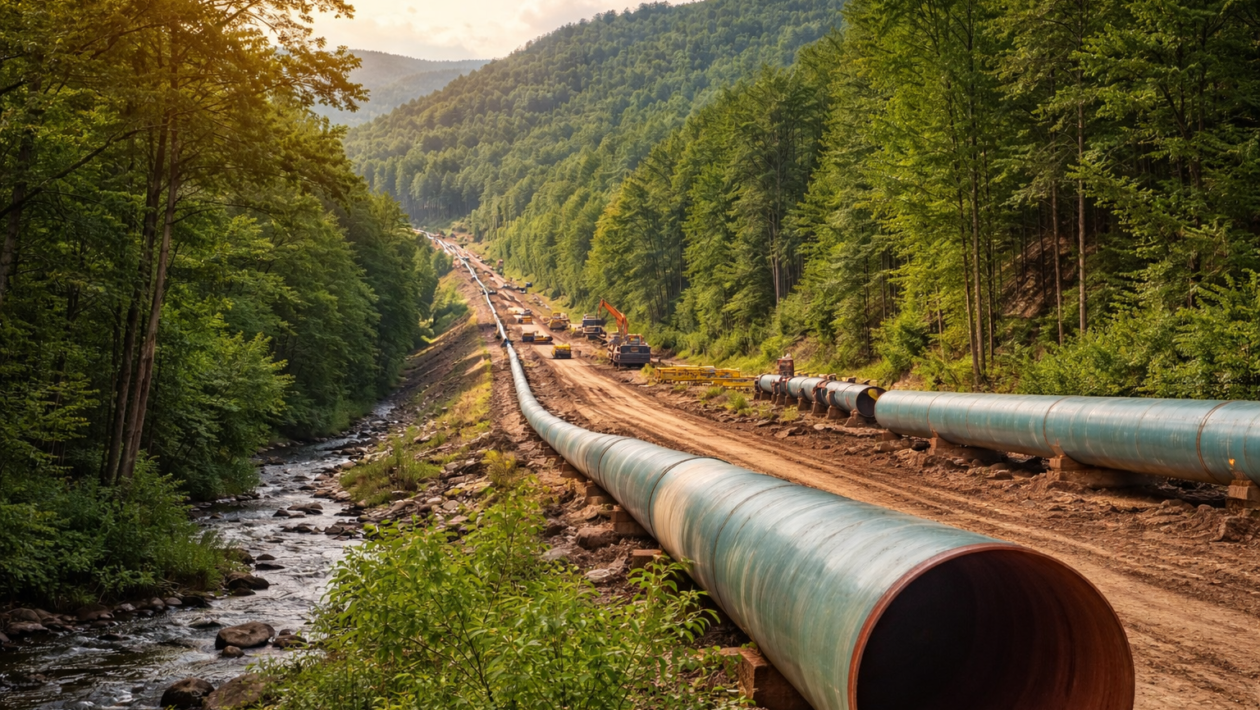
Richmond, Va. — Just days before Christmas, the Virginia Department of Environmental Quality (DEQ) approved a major water permit for a large methane gas pipeline expansion known as the Southeast Supply Enhancement Project (SSEP) — despite strong opposition from residents, environmental groups, and advocates across Appalachia.
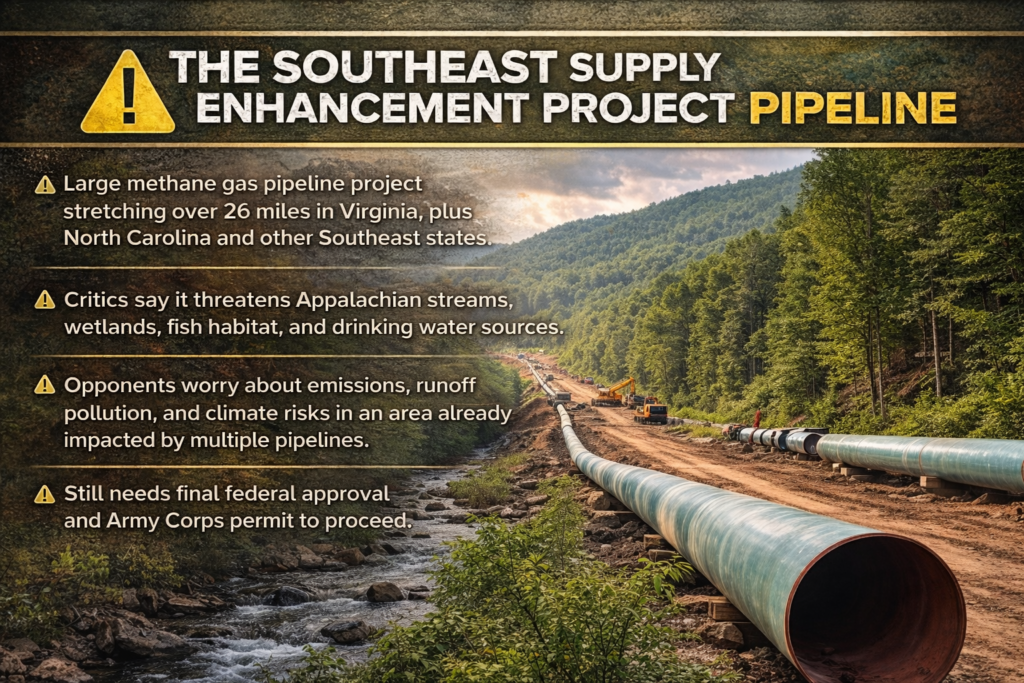
The approval, granted on December 23, allows Transcontinental Gas Pipe Line Company (Transco) to move forward with plans that would impact streams, wetlands, and rural communities stretching from Virginia through North Carolina and deep into the Southeast.
Environmental organizations, including Appalachian Voices, Appalachian Mountain Advocates, and the Southern Environmental Law Center, argued during a December 18 public hearing that the project failed to adequately consider less damaging ways to cross waterways and did not fully evaluate the cumulative environmental impact — especially in regions already crisscrossed by existing pipelines.
Why Appalachia Is Paying Attention
In Virginia alone, the project includes more than 26 miles of new pipeline in Pittsylvania County, with additional pipe planned across multiple counties in North Carolina. Much of the new infrastructure would be laid alongside existing high-pressure pipelines, a practice critics say increases risks for nearby residents and ecosystems.
Parts of the proposed route closely resemble the controversial Mountain Valley Pipeline Southgate extension, a project many Appalachian communities associate with erosion, sediment pollution, and long-term environmental damage.
Environmental advocates warn that the SSEP could threaten mountain streams, wetlands, fish habitat, and drinking water sources, particularly in Appalachian areas where steep terrain and heavy rainfall increase the risk of runoff and sedimentation.
“This is about water, land, and people who live here,” said one regional advocate, noting that many affected communities will see no direct benefit from the pipeline while shouldering the environmental cost.
Bigger Than One Pipeline
Beyond the land disturbance, the project also includes expansions to gas compressor stations across several states — facilities that release emissions and have raised health concerns in nearby communities.
Critics argue that approving new fossil fuel infrastructure ignores growing scientific consensus linking continued fossil fuel use to stronger storms, heavier flooding, and climate instability — impacts already being felt across Appalachia.
Supporters of the project say the pipeline is needed for energy supply. Opponents counter that much of the gas is intended for export, not local use, and question whether Appalachian communities should bear the risk.
What Happens Next
While Virginia and North Carolina have issued state-level permits, the project still requires federal approvals, including a Clean Water Act permit from the U.S. Army Corps of Engineers and authorization from the Federal Energy Regulatory Commission (FERC).
For many in Appalachia, this approval feels familiar — another fight over land, water, and who ultimately pays the price.
Have you been following this pipeline issue, or is this the first you’re hearing about it? Let us know in the comments.